


Why Didn’t My Yellow Rattle Germinate?
Why Didn’t My Yellow Rattle Germinate?
Yellow Rattle is one of the most useful wildflowers for creating a more flower-rich meadow, but it can sometimes be slow or uneven to establish.
If you sowed Yellow Rattle in autumn and saw little or no growth the following spring, it does not necessarily mean that all the seed has failed.
Successful germination depends on several factors, including seed freshness, autumn ground preparation, winter weather, soil contact, light levels and the presence of suitable host plants.
Here are the most common reasons Yellow Rattle may not appear as expected.
1. The seed was not fresh enough
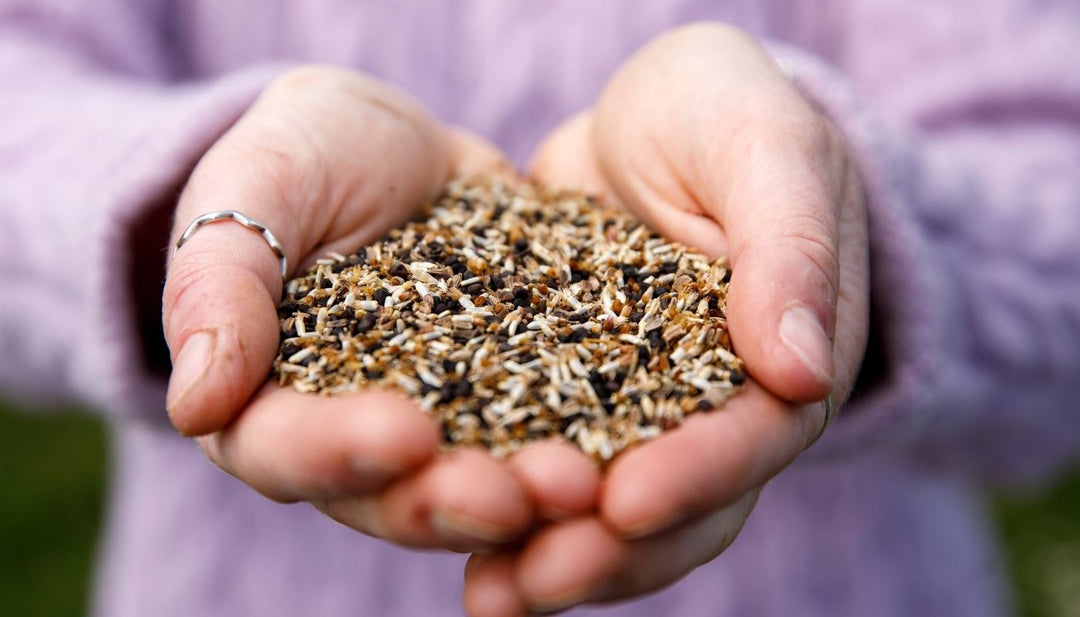
Yellow Rattle seed loses viability relatively quickly.
For the best chance of germination, freshly harvested seed should be sown during the autumn in which it is purchased. Seed that has been stored for a long period, particularly into the following year, may have a much lower germination rate.
This is why Connecting to Nature supplies Yellow Rattle seasonally following the annual harvest rather than carrying old seed from one season to the next.
2. It was sown too late
Yellow Rattle seed needs an extended period of natural winter cold and moisture before it can germinate.
This process is known as cold stratification.
We recommend sowing fresh Yellow Rattle seed from August to November. Seed sown later may still germinate if it experiences enough cold weather, but success becomes less predictable.
Spring sowing is generally not recommended because the seed may not receive the prolonged cold period it needs.
3. The grass was not cut short enough
Yellow Rattle seedlings need light.
If the existing grass is long, dense or matted, the seed may become trapped above the soil or the young seedlings may be shaded before they can establish.
Before sowing, cut the grass as short as possible and remove all cuttings.
The area should look more open and closely cropped than a typical lawn.
4. There was too much thatch
Thatch is the layer of dead grass, roots and plant material that can build up between the green growth and the soil.
If Yellow Rattle seed lands on a thick layer of thatch, it may never make proper contact with the ground.
After cutting, rake or scarify the area firmly to remove dead material and expose patches of soil.
Simply scattering seed over the surface of an intact lawn is unlikely to give good results.
5. The seed did not make contact with the soil
Yellow Rattle seed needs good seed-to-soil contact.
Once the seed has been sown onto exposed ground, press or tread it gently into the soil surface.
Do not bury it deeply or cover it with compost. The seed should remain close to the surface, where it has access to light and natural winter moisture.
6. The seed was spread too thinly
When sowing a large area, it can be tempting to scatter the seed very thinly in an effort to cover every square metre.
However, the main goal in year one should be to establish successful pockets of Yellow Rattle.
We recommend sowing small pinches of seed onto prepared patches of soil at intervals throughout the meadow. This encourages small clusters of plants to develop rather than leaving individual seedlings isolated across a wide area.
Once those clusters flower and shed seed, Yellow Rattle can begin spreading naturally through the meadow in later years.
7. The young seedlings were mown
Yellow Rattle begins germinating in spring, but the young seedlings are small and can be difficult to identify.
If the area is mown after germination begins, the seedlings may be damaged or removed before they become noticeable.
If an early spring cut is required because the grass has grown strongly over winter, carry it out before Yellow Rattle seedlings begin appearing.
Once germination starts, stop mowing and allow the plants to develop.
8. The grass was too vigorous
Yellow Rattle is often introduced specifically because grass is dominating a meadow.
However, very dense or vigorous grass can also make it difficult for young Yellow Rattle seedlings to establish in the first place.
Good autumn preparation is therefore especially important in grassy areas.
Cut the grass very short, remove all cuttings, scarify firmly and expose enough soil to give the seedlings light and space.
Do not apply fertiliser or nutrient-rich compost, as this will encourage stronger grass growth.
9. There were not enough suitable host plants
Yellow Rattle is a hemiparasitic wildflower.
Although it can germinate independently, it needs to attach to the roots of nearby host plants as it develops. Its most common hosts are grasses, although it may also attach to other meadow plants.
Yellow Rattle is therefore best introduced into an existing grassy area or meadow.
It is not suitable as a standalone crop on completely bare ground without suitable host plants nearby.
10. Weather and site conditions affected germination
Even when preparation and sowing are carried out correctly, germination can vary from year to year.
Possible influences include:
-
A mild winter with insufficient cold
-
Very dry ground during germination
-
Prolonged waterlogging
-
Late spring frosts
-
Heavy competition from existing vegetation
-
Differences in soil and local growing conditions
Wildflower establishment is influenced by natural conditions, so no two meadows will behave in exactly the same way.
11. The seedlings are present but difficult to recognise
Young Yellow Rattle seedlings are not immediately dramatic.
They begin as small green plants close to the ground and can be difficult to distinguish from other meadow seedlings.
As they develop, they form upright stems with narrow, toothed leaves. Their distinctive yellow flowers usually appear from late spring into summer.
Before assuming the sowing has failed, inspect the area carefully and allow enough time for the plants to become recognisable.
Is patchy germination normal?
Yes.
Yellow Rattle often establishes in scattered pockets during its first year rather than appearing evenly across the entire meadow.
These initial clusters are valuable. If they are allowed to flower, ripen and shed seed, the plant can spread naturally into nearby areas.
The distribution of Yellow Rattle may continue to change from year to year depending on the grasses, soil conditions and meadow management.
When will Yellow Rattle begin reducing the grass?
The first year should be viewed primarily as an establishment year.
A small number of newly established plants may not make a dramatic difference to the surrounding grass immediately.
Once Yellow Rattle has completed its first lifecycle and spread more seed, stronger populations can begin to develop. From the second year onwards, its effect on vigorous grass growth may become more noticeable.
Yellow Rattle is not an instant grass treatment. It works as part of the long-term development and management of a meadow.
Should I sow more seed?
If no Yellow Rattle appears, review the site and preparation before simply adding more seed.
Ask:
-
Was the seed fresh?
-
Was it sown between August and November?
-
Was the grass cut very short?
-
Were all cuttings removed?
-
Was the ground scarified firmly?
-
Was enough soil exposed?
-
Was the seed pressed into contact with the soil?
-
Was the area left unmown after germination began?
If preparation was limited, correct those issues before sowing fresh seed the following autumn.
Where some plants have established, allow them to flower and shed seed before deciding whether additional sowing is needed.
How to improve your chances next autumn
For the best chance of successful establishment:
-
Use freshly harvested Yellow Rattle seed.
-
Sow from August to November.
-
Cut the grass very short.
-
Remove all cut vegetation and thatch.
-
Scarify to expose patches of soil.
-
Sow small pinches onto prepared areas throughout the meadow.
-
Press the seed onto the soil surface.
-
Do not bury or cover it deeply.
-
Avoid fertiliser.
-
Stop mowing once seedlings begin to emerge.
-
Allow established plants to flower and shed seed before cutting.
Yellow Rattle can take patience, but even a few successfully established clusters can become the foundation for a much stronger population in the years ahead.
For full sowing instructions, read How to Sow Yellow Rattle in an Existing Lawn or Meadow.
To learn more about how the plant works, read What Is Yellow Rattle and Why Is It Called the Meadow Maker?