


Why Didn’t My Wildflower Seeds Grow? Common Reasons & What to Do Next

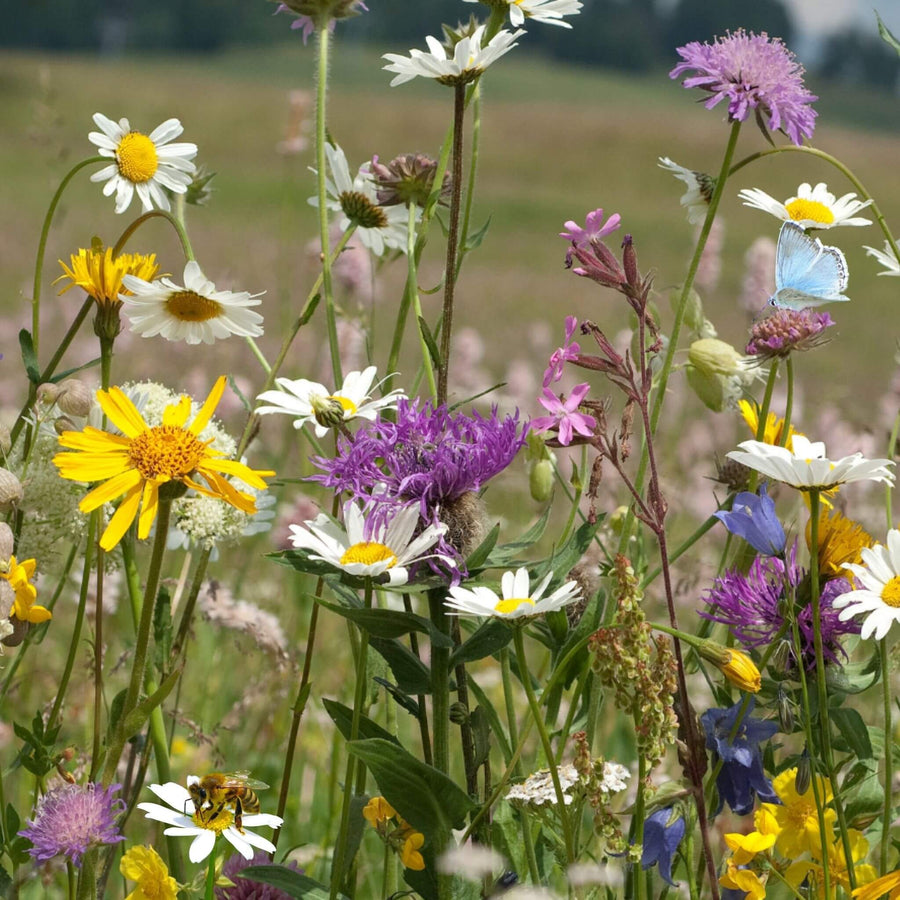
Irish wildflower meadow in full bloom.
Growing wildflowers should feel joyful, but we know it can be disappointing when you sow seed, wait patiently, and very little seems to happen.
The good news is that wildflower seed “failure” is usually not a mystery. In most cases, it comes down to one of a few common issues: too much grass competition, not enough contact with bare soil, seed sown too deeply, very fertile ground, dry weather, or simply expecting too much too soon.
Wildflowers can be wonderfully resilient, but they do need the right start. Here are the most common reasons wildflower seeds don’t grow - and what you can do next.
1. The seed was sown into existing grass
This is probably the most common reason wildflower seeds don’t establish well.
Wildflower seeds need space, light and contact with soil. If they are scattered directly into an existing lawn or thick grass, most of the seed will sit on top of the grass, get eaten by birds, dry out, or fail to reach the soil surface.
Grass is also very competitive. It takes up light, water and nutrients quickly, leaving very little room for delicate wildflower seedlings.
What to do next
If you want to create a wildflower area from lawn, you have a few options:
- Remove the grass completely and sow into bare soil.
- Scarify or rake very hard to expose soil before sowing.
- Use yellow rattle to weaken grass over time.
- Start with a smaller prepared patch rather than trying to convert a whole lawn at once.
For best results, wildflower seed should be sown onto prepared, weed-free, bare soil. If you're starting from scratch, our step by step guide to preparing a stale seedbed for wildflowers explains how to create a cleaner seedbed before sowing.
Not sure which wildflower seed to choose?
Browse our wildflower seed mixes for gardens, lawns and meadows, or read our guide to choosing a wildflower seed mixture for your space.
2. There wasn’t enough bare soil
Wildflower seeds do not need to be buried deeply, but they do need to touch the soil.
If seed is scattered onto moss, thatch, mulch, stones, compacted ground or long grass, germination will be patchy. Even when the seed does germinate, tiny seedlings may struggle to root properly if they are not in good contact with the soil.
What to do next
- Before sowing, rake the area well and aim for a fine, open seedbed. It does not need to be perfect, but it should be loose enough for seed to settle into the surface.
- After sowing, gently firm the seed in. You can do this by walking over the area, using a roller, or pressing the seed down with the back of a rake.
- The aim is simple: seed on the surface, touching the soil, with access to light.
3. The seed was buried too deeply
Wildflower seed is often very small. Many species need light to germinate, so if they are buried under a heavy layer of soil or compost, they may never appear.
This can happen when seed is raked in too deeply after sowing, covered with compost, or added before a heavy layer of topsoil.
What to do next
- Wildflower seed should usually be surface sown.
- Scatter it evenly, press it into the soil, and avoid covering it heavily.

- A very light rake is fine if needed, but do not dig the seed in.
4. The soil is too rich or fertile
This one can feel counterintuitive. We are used to thinking that “good” soil means rich, fertile soil, but wildflowers often prefer poorer ground.
If the soil is very fertile, grass and vigorous weeds tend to dominate. The wildflowers may germinate, but they can quickly get outcompeted.
This is especially common in former lawns, vegetable beds, heavily composted areas, or ground that has been fertilised in the past.
What to do next
- Avoid adding fertiliser or rich compost before sowing wildflower seeds.
- If your soil is very fertile, you may need to reduce fertility over time by cutting and removing growth rather than leaving it to rot back into the soil. Removing cuttings is important because it helps slowly lower nutrients and gives wildflowers a better chance.
- For a quicker, more colourful result on fertile garden soil, an annual pollinator mix may be more suitable than a traditional perennial meadow mix.
5. Birds or wildlife ate some of the seed
Wildflower seed is part of the natural food chain, so it is normal for birds and small mammals to take some of it.
This does not usually destroy a whole sowing, but if the seed was left sitting visibly on top of the ground, losses can be higher.
What to do next
- Sow onto well-prepared bare soil and firm the seed in after sowing. This helps keep the seed where it needs to be.
- You can also mix very fine wildflower seed with dry sand before sowing. This makes it easier to spread evenly and helps you see where you have already sown.
6. The weather was too dry after sowing
Like all seeds, wildflower seeds need moisture to germinate. If you sow during a dry spell, germination may be delayed or patchy.
This is especially true for spring sowings if warm, dry weather follows. Seed may simply sit in the soil and wait until conditions improve.
What to do next
- If you sow in spring, keep an eye on the weather. In small garden areas, you can water gently during dry spells until seedlings are established.
- For larger areas, it may be more realistic to sow in autumn, when soil is naturally moist and seeds have time to settle before spring growth.
- The important thing is not to panic too quickly. Some wildflower seeds germinate when conditions are right, not necessarily when we expect them to.
7. It was sown at the wrong time for the result you wanted
Wildflower seed can often be sown in spring or autumn, but the timing affects what you see and when.
Spring sowing can work well, especially for annual colour and prepared garden areas. Autumn sowing can be excellent for many native perennial wildflowers because it mimics the natural cycle of seed falling onto the ground at the end of the growing season.
Yellow rattle is different. It needs a period of cold weather to germinate well, so it is best sown fresh in autumn.
It also helps to understand what type of wildflower seed mix you are sowing. Annual wildflowers are usually best for quick colour, while biennial and perennial species are more about longer-term establishment and repeat flowering in future years. If you’re not sure what to expect, read our guide to the difference between annual, biennial and perennial wildflower species.
If your main question is when you’ll actually see flowers, our when will my wildflowers bloom guide is a useful next read. It explains why some mixes flower in the first year, while others take more time to establish.
What to do next
- Think about what you are trying to grow.
- For quick colour, choose an annual or easy-growing pollinator mix and sow in spring.
- For a longer-term wildflower meadow, autumn can be a very good time to sow.
- For yellow rattle, sow in autumn into short grass or prepared meadow areas.
8. You expected flowers in the first year
Some wildflower mixes are designed to flower quickly. Others are longer-term meadow mixes that take more time to establish.
Annual wildflowers can give colour in the first season, often within weeks if conditions are good. Perennial native wildflowers may spend much of their first year developing roots and leaves rather than flowers.
This does not mean they have failed. A first-year meadow can look quite modest while the plants are quietly establishing below the surface.
What to do next
- Check what type of mix you sowed.
- If it was an annual mix, you should expect flowers in the first year.
- If it was a perennial meadow or native wildflower mix, be patient. You may see more flowers in year two and beyond, especially with the right cutting and lifting routine.
- A wildflower meadow is not a one-season bedding display. It is a living habitat that develops over time.
9. The area was mown, weeded or tidied too soon
Wildflower seedlings can be tiny and easy to mistake for weeds or grass. If the area is mown too closely, weeded too aggressively, or tidied before seedlings have established, young wildflowers may be removed before they have a chance.
On the other hand, some mowing can be useful in the first year if annual weeds are growing faster than the wildflowers - but timing matters.
What to do next
- Give seedlings time to show themselves. If you are unsure what is growing, let the area develop a little before making big decisions.
- For meadow areas, annual cutting and removing the cuttings is usually part of the long-term management. But avoid repeatedly cutting new wildflower seedlings too low before they have established.
- If the area is very weedy, cut high rather than scalping the ground, and remove the cuttings.
So, has your wildflower sowing failed?
Not necessarily.
A patchy first year does not always mean failure. Some seeds may still germinate later. Some perennial wildflowers may be establishing quietly. Some bare patches may even be useful for wildlife, especially solitary bees.
But if you have thick grass, no visible seedlings, or the seed was sown without soil preparation, it may be worth taking action.
What to do next: a simple recovery plan
If you sowed into grass
Cut the grass very short, remove the cuttings, and scarify hard to expose soil. For a longer-term meadow, consider sowing yellow rattle in autumn to weaken the grass.
If you sowed onto bare soil but nothing appeared
Check whether the seed had good soil contact, whether the area dried out, or whether it was buried too deeply. You may be able to lightly rake, firm and overseed at the next suitable sowing window.
If you have lots of grass and very few flowers
Focus on reducing grass vigour. Cut and remove growth, avoid feeding the area, and consider yellow rattle.
If you have leaves but no flowers
Be patient. If you used a perennial mix, flowering may improve in the second year.
If you want a quicker win
Try a small, well-prepared patch with an annual pollinator mix. This can give colour and nectar in one season while your longer-term meadow develops elsewhere.
How to give wildflower seeds the best chance
For most wildflower seed mixes, the basics are the same:
- Choose the right seed mix for your site.
- Prepare bare soil.
- Remove grass and weeds where needed.
- Do not add fertiliser.
- Sow thinly and evenly.
- Press the seed into the soil.
- Keep small areas watered during dry spells.
- Be patient, especially with perennial mixes.
- Cut and remove growth as part of ongoing meadow management.
Wildflowers are not difficult, but they do ask us to garden a little differently. Less feeding. Less mowing. Less tidying. More patience. More observation. More trust in natural cycles.
And when they do establish, they reward you with something far richer than a perfect patch of colour: a living, changing habitat for bees, butterflies, birds and all the small creatures that share our gardens.
Not sure what to sow next?
If your first attempt did not go to plan, don’t be put off. The right next step depends on your space.
- For bare soil, choose a wildflower seed mix suited to your site.
- For existing grass, start with yellow rattle or prepare the ground properly before sowing.
- For quick colour, choose an annual pollinator mix.
- For a lawn-style meadow, look at flowering lawn or low-growing meadow options.